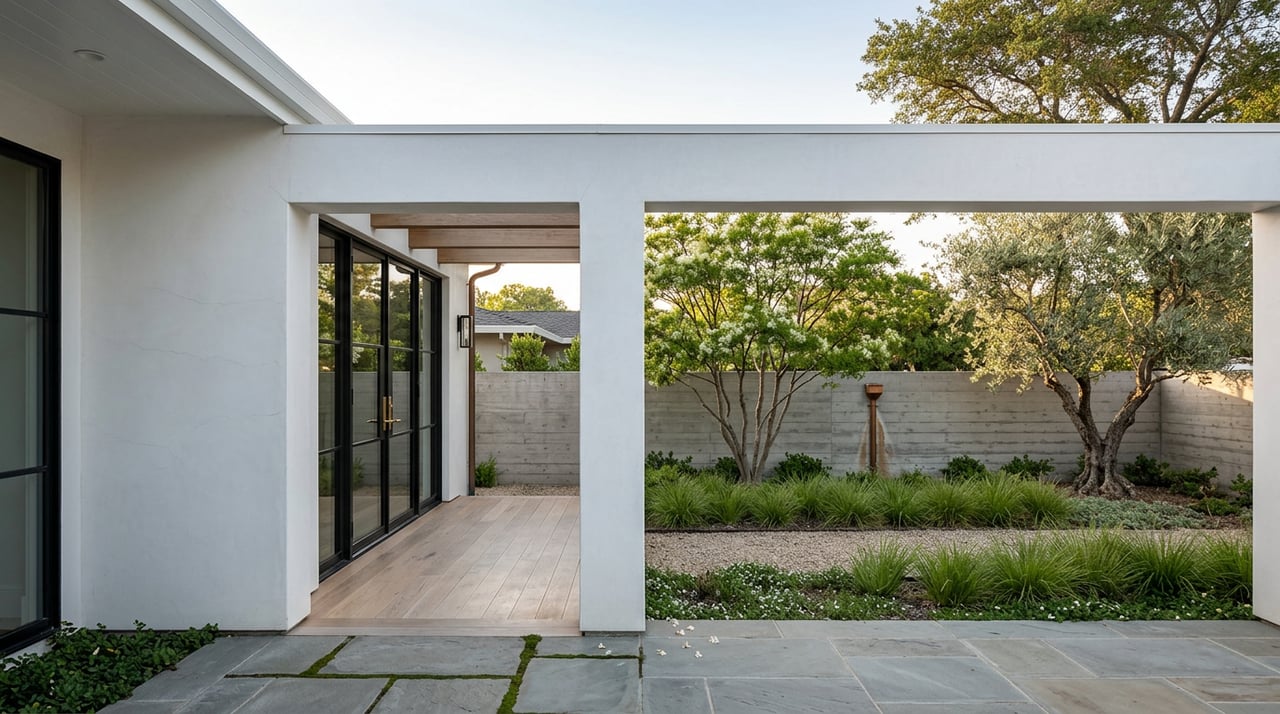
Rancho Park's Clubhouse Sat Empty for Five Years. The City Just Bet Big to Fix It.
September 24, 2026
September 24, 2026
If you've golfed at Rancho Park anytime in the last five years, you already know the punchline. No clubhouse. No snack cart. For a stretch, not even a soda machine that worked. Golfers who've played the course for decades have watched the building sit stripped and closed, joking on review sites that the renovation has been "in progress" since before some of their kids started high school.
That joke has an expiration date now. In January 2026, the Los Angeles Department of Recreation and Parks quietly closed out a year-long process to decide who gets to rebuild the food and beverage operation inside that clubhouse, and the answer says something the neighborhood hasn't fully absorbed yet: the city didn't pick the safe, proven operator. It picked the bigger idea.
The complaints piled up for years, and they were specific. Regulars described a course with no snack shack, no snack cart, no food truck, and a clubhouse that had been stripped to the studs and left that way. One longtime player, writing in 2026 after playing the course for four decades, called it the worst condition he'd ever seen it in. Another flagged that Rancho Park was charging four dollars more per round than comparable city courses like Griffith or Sepulveda, with nothing extra to show for it.
None of that was really about the golf. The layout, a par-71 designed by William P. Bell and William H. Johnson that debuted with the 1949 U.S. Public Links Championship and later hosted eighteen L.A. Opens, has stayed the same undulating, small-greened test it's always been. What disappeared was everything around the golf: the place to grab a beer after a round, the banquet room for a birthday party, the reason to linger.
The city put out a formal request for proposals for the clubhouse's food and beverage concession in August 2025, with a ten-year term plus a five-year extension option on the table. Proposals were due November 20, 2025. Four came in, evaluated by a five-person panel with backgrounds in golf operations and concessions.
One of the bidders was Victory Snacks, Inc., operating as Victory Links, the same team behind the Penmar Golf Café in Venice. That's a real credential. Victory Links took over an underperforming, underused café in 2019, kept it running through the depths of the pandemic when golf foot traffic couldn't be counted on, and built it into a working community restaurant. If a city panel wanted the lowest-risk pick, a team with a completed turnaround already on the books at another municipal course would be the obvious choice.
The panel didn't pick them. According to the board report the Recreation and Parks Commission approved on January 15, 2026, the winning proposal came from an entity called 10460 Rancho, LLC, doing business as The Rancho. Their pitch leaned directly into the comparison with Penmar, arguing that Rancho Park's scale and history call for something different than a neighborhood café model. The report's own language calls the clubhouse "the crown jewel of the LA City golf portfolio," and The Rancho's proposal describes an ambition to become, in the operator's words, the neighborhood country club that doesn't require a membership fee.
That's the detail worth sitting with. The city had a proven operator on the table and chose a newer entity promising something more ambitious instead. Whatever opens at 10460 W. Pico Boulevard, it isn't being built as a scaled-down repeat of what already exists a few miles away in Venice.
Here's the sequence the board report lays out, and it's already partly behind us:
The city hasn't published a fixed reopening date beyond that build sequence, and the report is explicit that timing matters because the concession agreement needed to be locked in before the operator's design could be folded into construction planning. If you've driven past the course this year and noticed the north lot torn up, that's the plan working as written, not a stalled permit.
The concept described in the winning proposal leans into the site's own backstory rather than away from it. The pitch language calls for embracing the property's mission-style ranch roots with a modern facelift, food cooked fresh and affordable in an open kitchen over live flames, and a rollout that starts services incrementally rather than waiting for one grand unveiling. The plan includes a Rancho-style steak restaurant, a sports-oriented bar, and a dedicated events and banquet space, on top of the golf shop, snack service, and locker rooms the clubhouse has always housed.
There's a financial detail here that matters for anyone who assumes public projects like this get paid for out of city coffers. The board report projects roughly $6.9 million in revenue to the Recreation and Parks Department over the ten-year concession term, with no impact to the department's general fund. The renovation and buildout are the concessionaire's investment, not a taxpayer-funded line item. The city is trading exclusive food and beverage rights on one of its busiest municipal courses for a rebuilt clubhouse it didn't have to write a check for.
You can see the early version of that pitch already at The Rancho's own site, which describes the project as restoring the clubhouse into a fine dining and events destination rather than a return to its old snack-bar identity.
There's a piece of neighborhood trivia that makes this whole story land a little differently if you actually live here. Rancho Park the neighborhood didn't exist as its own identity until the late 1940s, when the area south of Olympic Boulevard split off from Westwood and needed a name. According to the neighborhood's own history, the honor of naming it went to Bill Heyler, a real estate broker who'd worked the area since 1927 and was credited with bringing in the golf course itself. The community took its name from the course. Whatever The Rancho becomes, it's rebuilding the thing the neighborhood was named after.
None of this construction sequence means there's nowhere to eat on site right now. Rancho Park Gardens, the longstanding diner tucked into the golf complex, has kept running with its counter seating, vinyl booths, and a window looking out on the driving range. It's the kind of place that serves breakfast all day and calls its pancake-and-bacon combo the "Tee Off Special." It isn't going anywhere while the bigger buildout happens around it, which means the neighborhood isn't actually choosing between nothing and a construction zone for the next year. There's still a place to sit down with a plate of eggs and watch someone else's approach shot land short.
If you're in Rancho Park, Cheviot Hills, or anywhere close enough to treat the golf course as part of your regular loop, the practical takeaway is patience with a specific shape to it. The city's own build sequence points to construction activity through 2026, with an incremental rollout rather than a single reopening day. The parking lot disruption you may already be seeing is scheduled, not a stalled project. And the operator chosen to fill the space is explicitly building toward something bigger than what closed five years ago, not a like-for-like replacement.
For a neighborhood that's spent half a decade watching a boarded-up clubhouse become background noise, that's a meaningfully different story than "it's finally getting fixed." It's a bet, backed by a formal city process and a ten-year revenue commitment, that Rancho Park's course deserves a bigger version of what it lost.
I keep an eye on details like this because they're the kind of thing that actually shapes daily life in this neighborhood, long before they show up in a listing description. If you're curious what else is shifting on the Westside, or you'd like a read on what your own Rancho Park property is worth in the current market, reach out to Lauren Morelli any time.
Stay up to date on the latest real estate trends.

Get assistance in determining current property value, crafting a competitive offer, writing and negotiating a contract, and much more. Contact me today.