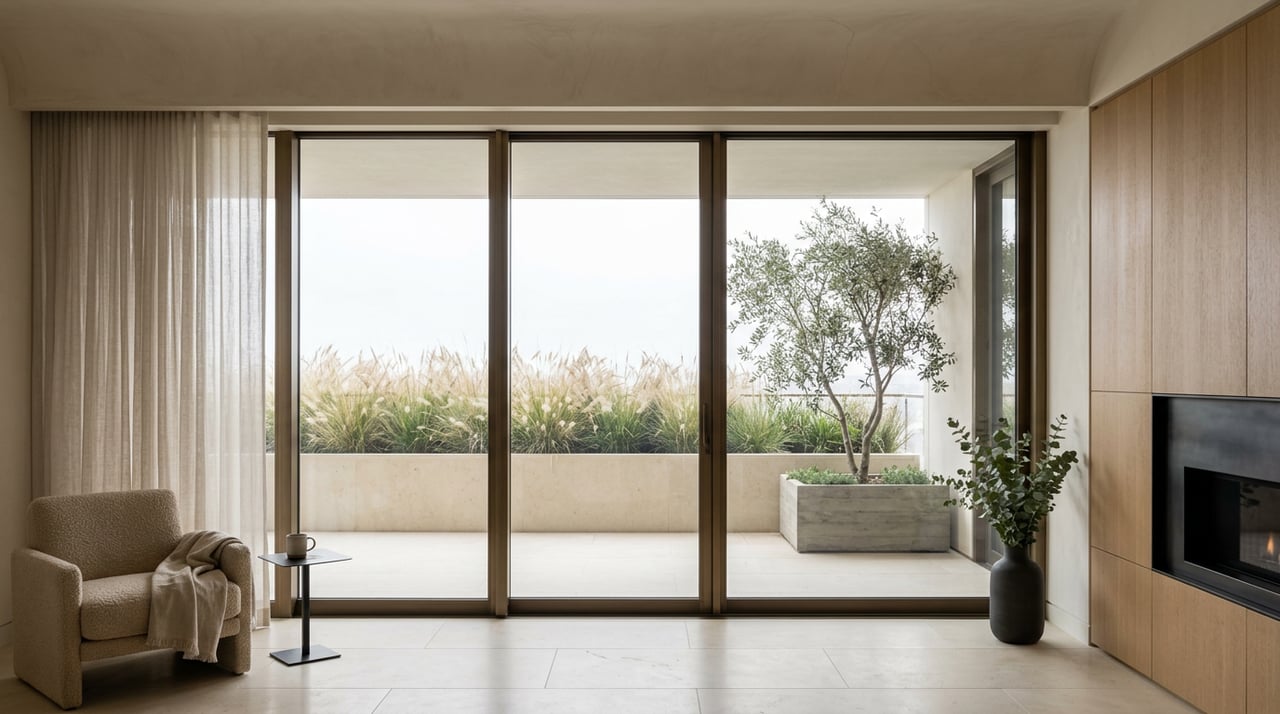
Century City Condo HOA Fees and What They Really Mean
July 23, 2026
July 23, 2026
A buyer touring two units on Avenue of the Stars last month asked a fair question. Both were two-bedrooms. Both listed near $1.7 million. Why did her lender flag one and clear the other in a day?
The answer sits in the HOA disclosure packet, not on the MLS printout. In Century City, that packet is doing more work to explain price, pace, and financing outcome than the list number itself. And the market has roughly a two-year window before the Metro D Line station at Avenue of the Stars and Constellation Blvd is expected to open in Spring 2027, according to Metro and the City of Beverly Hills. Between now and then, the gap between sticker price and true carry is the widest it has been in a decade of this neighborhood's history.
Century City is a tower market. That means the condo you buy is bundled with a staffing model, a reserve study, a lender-approval status, and a set of house rules. Every one of those bundles has a monthly cost, and the range is not a rounding error.
At a broad neighborhood level, monthly dues in full-service towers start around the low $1,000s per month for smaller units and rise into the $2,000 to $5,700+ range for larger residences with extensive staffing, utilities, or robust reserves. Zoom into a single classic building like Century Park East, and monthly HOA fees range from $600 to $1,800, covering concierge services, trash, sewer, and water, along with a private pet play-land, dog laundry room, car wash services, a fitness center with sauna, an Olympic-size pool, and a tennis court that also accommodates pickleball. At the flagship end, a $5 million-tier unit at Century Towers at 2222 Avenue of the Stars can carry HOA dues of around $5,800 per month covering tennis, fitness, pool, valet, security, and concierge.
Put in Tim Harford terms: the list price is what you owe once. The dues are what you owe every month for the next twenty years. Two units listed at identical prices can differ by $50,000 in carry over a five-year hold.
| Service tier | Representative buildings | Typical monthly dues band | What the dues buy |
|---|---|---|---|
| Flagship full-service | The Century, Fairmont Century Plaza Residences | ~$3,000–$5,700+ | 24-hour concierge, valet, resident dining, spa, screening room |
| Classic high-rise | Century Park East, Century Towers | ~$600–$1,800 for smaller units, higher for large plates | Concierge, pool, tennis, fitness, utilities |
| Low-rise enclave | Le Parc, The Enclave | Lower relative dues | Landscaped grounds, fewer staffed services |
Building tiers per the descriptions summarized in a Century City buyer's guide from Sotheby's International Realty affiliate Sir Joslin and The Century's building page.
At the neighborhood level, as of Q4 2025, average days on market ran about 72 days. Fine. But drill into a specific address and the numbers change character. Century Park East at 2170 Century Park East, a low-rise building of 176 units built in 1966 with sizes ranging from 608 to 2,434 square feet, saw units typically stay on the market for about 236 days, per HelloCondo's building profile.
Why the gap between 72 and 236? Part of it is unit condition. Part of it is dues relative to what buyers expect for a given price band. And a meaningful part is quiet: lender project approval.
FHA, VA, and conventional agencies apply condo project eligibility rules. If a building is not warrantable, a buyer's financing options narrow, cash competition thins, and days on market extend. That is the friction almost never mentioned in the listing description. Ask any listing agent working a Century City closing in the last twelve months, and the phrase "waiting on the warrantability letter" comes up more than any square-footage debate.
For sellers, this is the pricing insight that matters most. A dated unit in a building with clean reserves, current inspections, and a lender-approved status will sell faster than a renovated unit in a building with a pending special assessment. The disclosure packet is doing the pricing work. Present it well and you compress your DOM.
Section 1 of the D Line Extension, per NBC Los Angeles, opened on May 8, 2026 with three new stops at Wilshire/La Brea, Wilshire/Fairfax, and Wilshire/La Cienega; the second phase of the subway extension, tentatively set to open in spring 2027, will add stations in Beverly Hills and Century City. That Century City station will land at Avenue of the Stars and Constellation Blvd, one block from the front doors of several of the buildings named above.
A Metro station is not a paint refresh. It is a structural amenity that repricing comps have not yet absorbed. Buildings within a three-minute walk of the future station entrance will comp differently after spring 2027 than they do today. That has two practical implications for the current window.
For a buyer, the tradeoff is real. Buying in 2026 means living through major street restoration and deck removal along Constellation Blvd planned to begin in spring 2026, which may include temporary lane reductions and weekend work. It also means buying before the transit value is priced in. For a seller in a station-adjacent building, the incentive structure runs the other way. Waiting has a case. Selling now means marketing against a promise, not a platform.
The following questions are the ones that separate a Century City offer from a generic condo offer. Ask them in this order, and ask them in writing.
A Century City condo purchase is priced twice. Once in the offer, and then again every month for the length of ownership. The listing sheet gives you the first number. The disclosure packet gives you the second one, and the second one is the one that determines whether the deal ages well.
In the current window, the two levers most under a buyer's or seller's control are the same two levers the market is watching. The building's HOA health explains the pace of the sale. The proximity to the future Constellation station explains the shape of the appreciation curve. Neither shows up on the listing sheet. Both belong in the conversation before the offer goes in.
Does a higher HOA fee mean a worse investment? Not on its own. Higher dues in a full-service tower can reflect deep staffing, strong reserves, and utilities bundled in. The question is whether the dues are justified by what they cover and by the reserve health behind them.
Should I wait until the Constellation station opens to buy? If station-adjacency is the reason you are buying, the market will likely reprice comps after Spring 2027. If the lifestyle, view, or building itself is the reason, the transit opening is a bonus rather than a thesis.
Which buildings are considered full-service versus classic? Named examples of the flagship tier include The Century and the Fairmont Century Plaza Residences. Classic high-rises include Century Park East and the Century Towers at 2220 to 2222 Avenue of the Stars. Enclave-style properties include Le Parc and The Enclave.
Is Century City still a seller's market? Sales volume declined 17.4% from 46 to 38 transactions, average close price rose 1.6% from $1.88M to $1.91M supported by a 3.8% rise in price per square foot, and days on market increased 16.4% from 61 to 71 days, according to a market snapshot summarized by a local team's year-over-year read. That reads as a thinning, tiering market where preparation is doing the work that momentum used to do.
If you are weighing a Century City purchase, sale, or hold in this window, the smartest first step is a building-specific read on dues, reserves, and lender status paired with a comp analysis that treats the Constellation station as a scheduled event rather than a rumor. Lauren Morelli works with Westside buyers and sellers on exactly this kind of building-level diligence. Get a free home valuation or a private read on the tower you are watching.
Stay up to date on the latest real estate trends.
Get assistance in determining current property value, crafting a competitive offer, writing and negotiating a contract, and much more. Contact me today.