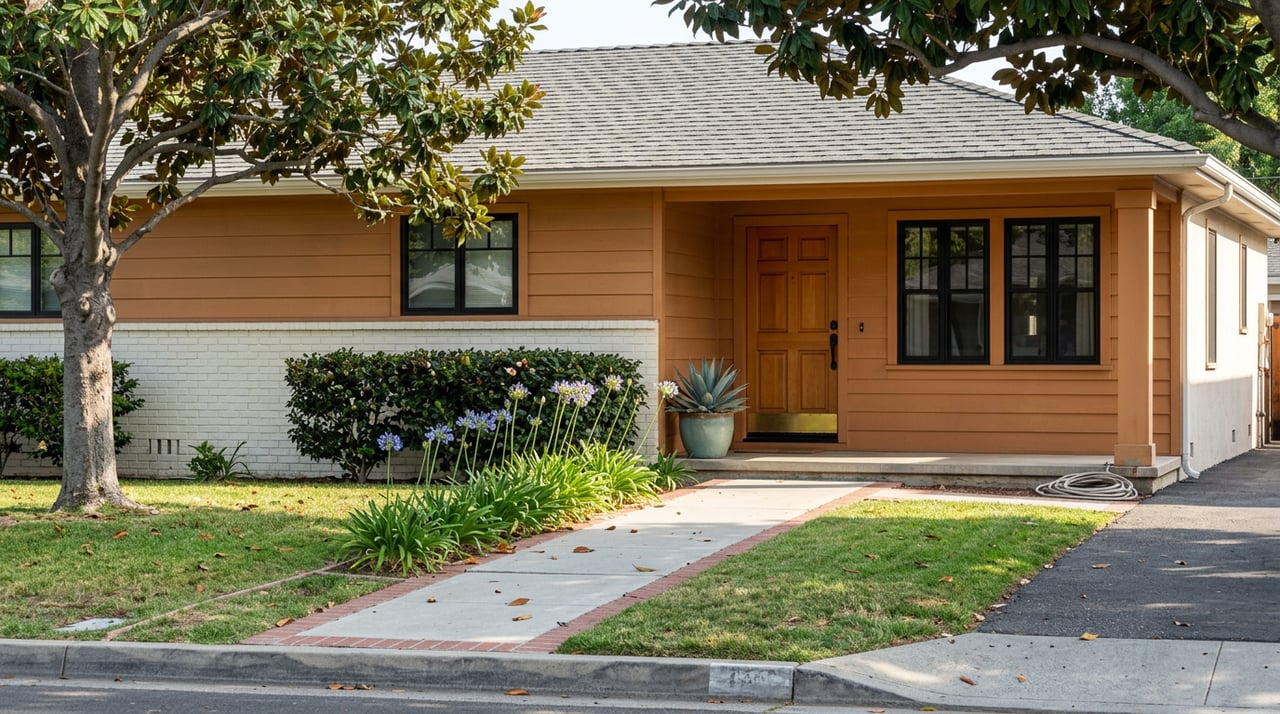
What’s Really Behind Westside Village Home Prices?
August 20, 2026
August 20, 2026
In March 2026, a home in Westside Village sold in 35 days. A year earlier, a comparable home in the same handful of blocks took 111 days to find a buyer. Prices over that stretch rose 18.6% year over year, landing at a median of $1.3 million. Those numbers travel fast at open houses and in group texts between friends comparing notes on the Westside. They sound like proof that a quiet pocket of Los Angeles just got discovered.
Look closer and the story gets more complicated. Nine homes sold in Westside Village in March 2026. Eight sold the same month a year before. A market built on nine transactions is not really a market in the way the word implies. It is a small sample that can swing 20 points in either direction depending on whether two of those nine happened to be gut renovations or one happened to be an estate sale priced to move.
Ask anyone who already lives in Westside Village why buyers pay up for the neighborhood and the answer arrives fast: Clover Avenue Elementary. The school carries a 10/10 GreatSchools rating and has been named a National Blue Ribbon School twice, a distinction that gets it recognized on lists well beyond the Westside. Its students feed into Palms Middle School, which extends the same reputation another few years further.
That reputation is real, and it has been real for a long time. Clover Avenue did not become a Blue Ribbon school in 2026. It has been drawing families to this specific pocket of streets for years, which means it can explain why Westside Village carries a durable premium over less school-anchored blocks nearby. What it cannot explain is why that premium suddenly accelerated in the space of twelve months. A school's reputation is a floor under prices, not a mechanism for a spike.
Set Westside Village's numbers next to the broader Westside submarket that contains it and the picture changes.
| Westside Village (March 2026) | Broader Westside (three months ending June 2026) | |
|---|---|---|
| Median sale price | $1.3M, up 18.6% year over year | $1.8M, up 1.4% year over year |
| Days on market | 35, down from 111 a year earlier | 42, up slightly from 40 a year earlier |
| Homes sold | 9 | 102 in June alone |
A submarket moving 102 homes in a single month cannot swing 18 points from sentiment. That kind of volume smooths out the noise a nine-sale sample cannot. The broader Westside's 1.4% gain is a far more honest read of where general demand actually sits this year. Westside Village's 18.6% is what happens when a tiny, tightly bounded pocket gets treated like it has the statistical weight of a much larger area.
If the school story is old news and the price swing is mostly a small-sample artifact, what actually changed in Westside Village recently enough to matter? The answer is sitting on a corner that has been empty for years.
The long-vacant former Albertsons site at Palms and Sepulveda is set to reopen as a Whole Foods in 2026. That is worth sitting with for a moment, because Westside Village already has two Trader Joe's within a mile. A third full grocery store in a neighborhood this size only makes sense if the existing two were not covering what residents actually needed on a Sunday, whether that was fresh seafood, a full produce section, or simply enough parking to not circle the block twice. The years-long vacancy at Palms and Sepulveda was itself evidence of a gap. Filling it with a Whole Foods closes that gap in a way two Trader Joe's never did.
This is the piece of the story that actually has a date attached to it and hasn't fully worked its way into asking prices yet. A school's reputation is priced in already, has been for years, and shows up in every comp an agent pulls. A grocery store that has not opened yet is a future convenience that current sellers are, at best, guessing at when they set an asking price.
Westside Village is bounded by National Boulevard to the north, Overland Avenue to the east, Charnock Road to the south, and Sepulveda Boulevard to the west. That is a small enough footprint that the neighborhood-level statistics you see on a listing page are drawn from a literal handful of streets. A house one block outside those lines, technically in Palms or Mar Vista, can share the same architecture, the same walk to the same coffee shop, and none of the Westside Village label.
If you are cross-shopping this pocket against a similar block nearby, ask whether the comparable sales an agent hands you actually fall inside the Clover Avenue Elementary attendance boundary or whether they are borrowing the Westside Village name loosely because it markets well. The distinction matters more here than in most Westside neighborhoods precisely because the area is so small that a few misclassified comps can shift a stated median by a meaningful amount. If school enrollment boundaries are part of your decision, verify them directly with LAUSD rather than trusting a listing description, since attendance zones can be redrawn and a home's proximity to a school is not the same as its zoning.
The 18.6% figure is not fabricated and it is not meaningless. It is simply too small a sample, over too short a window, to tell you that Westside Village's market has fundamentally repriced. What it can tell you is that something in this pocket is worth watching more carefully than the headline number suggests. That something is less the school, which has already been priced in for years, and more the Whole Foods opening on a corner that sat empty long enough for two other grocery stores to prove insufficient on their own.
For a buyer treating Westside Village as one option among several similar Westside pockets, the useful question is not whether the neighborhood is hot right now. It is whether current asking prices already assume a grocery-anchored convenience upgrade that has not opened yet, or whether that upgrade is still sitting ahead of the market. Get that timing wrong in either direction and you either overpay for a convenience that is not live yet or underbid a listing that is about to become more valuable than the current comps suggest.
If you are weighing a Westside Village listing against a comparable address in Mar Vista or Palms and want a second look at which comps actually hold up, Lauren Morelli can walk through the attendance boundaries, the sale history, and what the incoming Whole Foods is likely to mean for pricing over the next year. A free home valuation is a good place to start that conversation, whether you are buying into this pocket or deciding if it is time to sell out of it.
Stay up to date on the latest real estate trends.

Get assistance in determining current property value, crafting a competitive offer, writing and negotiating a contract, and much more. Contact me today.